10 WAYS TO CURB BAD READING HABITS
10 WAYS TO CURB BAD READING HABITS
By: Glenn L. Malimban, NBDB
People read in different ways: some can manage to read with a little light on, others can do it while doing other things like eating, listening to music. People can pick any place and any time to read. The point is to read, enjoy, and understand what you are reading. There are reasons why people never like readin g and one of them is having bad reading habits.
Replace a bad habit with a good one. You have to want to get rid bad habits and you must practice and work at it in order to change. The following are a few ways to curb bad reading habits that that tend to cause people to read slowly, lose interest, or not to reads at all.
1. Don’t move your lips when you read. Moving your lips slows you to a fast talking rate, about 150 words per minute. Put your fingers on your lips to stop the motion.
2. Don’t vocalize. Vocalizing means that you are pronouncing words in the voice box without making sounds. This also slows your reading rate to that of speaking. To check, rest your fingertips lightly against the vocal cord area of your throat. If you feel a vibration, or if you find that your tongue is moving, you are vocalizing.
3. Read everything at the same speed. When reading, set your rate according to your purpose for reading and the difficulty level of the material. Practice adjusting your rate to suit your material. The more difficult the material the slower the rate.
4. Do not regress out of habit. Regressing means rereading a word, phrase, or sentence out of habit and not because of need. Sometimes, it is necessary to reread something. Especially a difficult passage. But over time it becomes a habit. Unnecessary regressing really slows you down. Use a card or paper to cover the text after you read it to prevent regressing.
5. Read one word at a time. Do you think one word at a time, or in phrases? Slow readers tend to see only one word at a time. Good readers will see several words at a time and their eyes will stop only three or four times as they move across a page. Reading in idea-phrases speeds your reading and improves your understanding of what you have read. Mark the phrase in the sentenes of a passage, then practice seeing more than one word at a time
6. Read with sufficient light. Poor lighting will affect your eyes and having poor eyesight discourages people to read and loose the interest totally. Always make sure to read with good lighting even if you don’t have any problems with your eyesight.
7. Don’t read to get to sleep. A book is not a sleeping pill. A lot of people from this bad habit thinking that by tiring their eyes with them will fall asleep. It does but you loose the essence of reading a good book instead of enjoying it or you loose a good sleep because of a good book. Either way it is not beneficial. As much as possible never read when in bed.
8. Set aside time to read. People set time for everything – to sleep, to eat, to play, to bathe, and to shop. Set time in a day to do nothing but read and set it as your reading time. Do it every day for thirty days and it will automatically become a habit.
9. Don’t read in a vehicle. At times people tend to read while in a ride to pass time. This is not advisable. Small texts are difficult to read when you are in moving vehicle and consequently, may damage your eyesight. Look outside instead or engage in a conversation with somebody.
10. Avoid doing other things while reading. Your brain works best when doing one thing at a time. Reading while listening to music or eating divides your attention. Reading comprehension will be slower and you may eventually lose your interest in reading in favor of the other task. Labels: importance of reading, Library Resources, love for reading, read, reading, reading habit, secrets revealed in reading
Secrets to Improving Your Reading Stamina: Secrets revealed (Part 2)(2/2)
Comfort
Make sure your reading environment is comfortable and free from distractions.
· Turn the TV off and find a quiet spot where others are not talking.
· Sit at a desk with a comfortable chair.
· Ensure there is sufficient lighting. Use a desk light rather than relying on overhead lights.
If reading from a computer, the lighting source should come from a ninety-degree angle to the computer. Ensure overhead lights are not too bright as these will create glare. Use a monitor shield to minimize glare.
· Ensure your computer monitor is adjusted to the appropriate height and angle. The top of the monitor should sit just below the eye level and the monitor should be 18-23 inches away. Consult a good website on ergonomics such as (http://ehs.unl.edu/ Ergonomics/whathurts.cfm) for detailed information.
· Every hour, take a break from reading by getting up for a stretch and looking as far away into the distance as possible for 15-20 seconds, to retain your focus.
Practice
Practice your reading. There is no miracle solution to improving your reading stamina. Research shows that reading stamina will gradually increase with the amount of time spent reading. Just like athletes spend months and months preparing for the Olympics, reading stamina will only increase with quality reading practice.
· Set aside some time dedicated each week for reading.
· Set reading goals. Start with small goals. For example, tell yourself that you will read in ten-minute sessions initially. Then slowly build these up until you are able to read for one-hour sessions. Reward yourself when you reach these goals. Splurge on a new book or reading software; visit your local library to pick up some great reads.
· Remember that reading sessions are not meant to be like the New York marathon. Once you are able to read and concentrate well in one-hour sessions, do not over-stretch yourself. Take a five-minute break every hour to stretch, look away from your book or computer, or do other tasks (if you're in the office) such as filing. Taking short hourly breaks will ensure you maintain your concentration.
Enjoy
Enjoy your reading!
· Foster a love for reading by making books easily accessible in your home.
· Make reading an enjoyable family activity that everyone undertakes. Set aside two or three reading sessions a week so that everyone in the house reads. Remember, children will read if adults read too.
· Visit the local library.
· Read up on subjects which interest you, whether these are world politics or sports. Reading should not be stuffy and boring; it should be relevant to your life.
Get Tested
Get tested for visual, hearing and learning disorders. Especially in the case of children, continual reading difficulties may be a result of undiagnosed visual, hearing and learning disorders. Disorders such as dyslexia and ADHD can often benefit from specialized reading programs. Vision problems may be reducing reading stamina by causing tiredness and eyestrain.
Habits
Eliminate bad reading habits.
· Become aware of how you read. Do you vocalize (say words in your head or under your breath) as you read? Do your eyes constantly skip back to words you have previously read? Do you suffer from eye overwork, where you use excessive eye movements and eye fixations to read?
· Vocalizing, skip back and eye overwork will often drain reading stamina. Make a conscious effort to curb these habits while reading. Use specialized reading software designed for this purpose or consult books on the topic.
Your future
By following these secrets, your reading stamina will surely increase with time. Your increased reading energy levels will take you a long way, on your path toward increased knowledge and greater success at school and in the workplace. Reading for long periods will become easier and even enjoyable. So go on, improve your reading stamina and open yourself up into a whole new world.
Footnotes
Whitehead N. (2004), .The Effects of Increased Access to Books on Student Reading Using the Public Library., Reading Improvement, Fall Vol. 41 Issue 3, p165, 14p
http://www.rocketreader.com/newsletter/newsletter11.html (10:12am, Aug. 27, 2008)
Labels: importance of reading, importance of reading stamina, love for reading, read, reading, secrets revealed in reading
Secrets to Improving Your Reading Stamina (Part 1)1/2
The Importance of Stamina
Basketball legend Michael Jordan is not only strong, agile and accurate; he also has an awesome amount of stamina which keeps him in phenomenal form throughout the entire four quarters in each basketball game.
We may not all similar to slam-dunking sensations and unstoppable player like Michael Jordan, but stamina is important in a key area in our lives: our ability to read well.
As you know, reading well is a crucial life skill. Having a good reading stamina - the ability to read well for prolonged periods - is vital in ensuring we are proficient readers. Lack of reading stamina is like trying to drive a car without gas. Even a Ferrari without gas is useless! Reading stamina is the energy needed to fuel your reading habits. If you don't improve your reading stamina, reading becomes frustrating and yields little pleasure and results.
'Reading stamina is the energy needed to fuel your reading habits'.
Lack of reading stamina is becoming a major problem. According to a recent report by the Times Online in the United Kingdom, school students are increasingly losing their ability to read for prolonged periods.
Especially when we are inundated with an increasing amount of information in the age of the Internet, low reading stamina can stand in the way of achieving success in the workplace and at school.
Those with poor reading stamina usually do not enjoy reading and read out of necessity. They can miss out on a world of increased knowledge, academic and career success, and the joys of reading for pleasure.
Consider the case of John T Rex, information worker. He works at a medium size corporation in Chicago, Illinois. At work he must read reports, letters, emails, and use application software. John must review a lot of contracts, some of them as thick as 50 pages. John finds that his reading is fine for the first few pages. But with the turning of each new page, he finds it increasingly difficult to understand the text. After around five pages John needs to take a break to get away from the strain of reading. Unfortunately, this happens often and most of the documents are not thoroughly read. John has plenty of energy; he can chat for hours with his coworkers for instance. But when it comes to reading his energy vanishes after five to ten minutes. John firmly believes that he is a 'bad reader' and will simply never get better.
John's case is common for children and adults.
How Good Is Your Reading Stamina?
Take this quiz to find out.
1. Do you have trouble understanding what you read, if you only read it once?
2. Does reading make you tired?
3. Do you get sore eyes and headaches from reading?
4. Do you get easily distracted when reading?
5. Does it often take you a number of reading sessions to completely read a document or reports?
If you answered 'yes' to any of the above questions, it is possible you have a low reading stamina.
Fortunately, a low reading stamina can be improved with a little effort. Even a good reading stamina can be further improved.
So how do we ensure our reading stamina goes the distance to meet our reading needs? This newsletter will look at secrets on how to maximize your reading stamina and reading power. 'Maximize your reading stamina and reading power'.
Labels: importance of reading, importance of reading stamina, love for reading, reading
Halina’t Magbasa! Bagong Kaalaman ay Tuklasin Na!
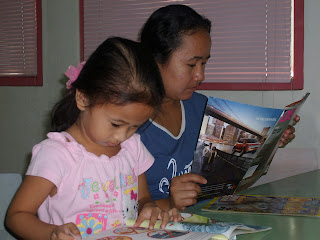
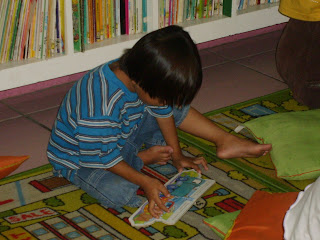
Sinasabing ang pagbasa ay mahalagang pundasyon ng edukasyon maliban sa pagsulat at pagbilang. Mula dito nalilinang ang ating abilidad sa pag-unawa ng mga nasusulat na kwento, kuro-kuro, balita, pangyayari atbp. Sa pagbasa rin umuusbong ang ating imahinasyon at natatanging idealismo. Natututunan din nating sumangayon o tumutol sa opinyon ng mga manunulat at makabuo ng sarili nating paninindigan. Masasabi kong malaki ang impluwensya ng hilig sa pagbasa sa ating likas na karunungan.
Sa aking pagsangguni sa iba’t-ibang aklat at reperensiya, nabuo ko ang sarili kong depinisyon ng pagbasa; Ito ay proseso ng pagtunghay, pag-unawa at pagkuha ng ideya, kaisipan o mensahe ng may-akda sa babasahing kanyang isinulat at upang mabigkas nang pasalita ang mga ito. Nakapaloob din sa pagbasa ang pakikipagtalastasan tulad ng pakikinig, pagsasalita, at pagsulat.
Narito ang ilan sa kahalagahan ng pagbasa:
1. Magkaroon ng impormasyon;
2. Makapag-isip nang malalim tungkol sa pansariling ideya at karanasan;
3. Malaman ang ideya at karanasan ng iba;
4. Makasiguro sa sariling paniniwala;
5. Makatuklas ng karunungan sa iba’t ibang larangan;
6. Makakuha ng mabuting aral na gabay sa buhay;
7. Magtamo ng kasiyahan at magamit ng makabuluhan ang oras;
8. Malaman ang makabagong kaalaman, halimbawa sa larangang panteknolohiya;
9. Mahasa ang kaisipan at;
10. Masuri ang imahinasyon.
Ang pagbasa ay bahagi na ng ating pangaraw-araw na pamumuhay. Bawat sulok, bawat lugar, may titik, numero at salita. Sa laki ng papel na ginagampanan nito, nararapat lang na ito ay pagtibayin at paunlarin.
Bigyan natin ng panahon at halaga ang paglago ng ating kakayahan sa pagbasa. Sinasabing sa pagbabasa nagsisimulang makarating sa iba’t-ibang lugar, makakilala ng magiting na personalidad at makapaglalakbay sa iba’t ibang panahon. Ang pagbabasa ay hindi ordinaryong kakayahan, ito ay pangangailangan tulad ng pagkain na nagtatanggal ng uhaw at gutom sa kaisipan.
Busugin ang kaisipan, Halina’t Magbasa, Bagong Kaalaman ay tuklasin na!
Sa pagbabasa malalaman mo ang nakaraan, maiintindihan ang kasalukuyan, at makikita ang kinabukasan.
Labels: importance of reading, Kahalagahan ng Pagbabasa, pagbasa, read
The Reader's Edge

Digital text is rapidly displacing printed books as the publication of choice. The reasons are apparent as they are quite unsettling: People’s attention span gets shorted by the day, leaving little time to savor the printed word.
This unavoidable reality shouldn’t stop you from picking up a book and exploring an entirely different world between its covers. Reading is and will always be a potent tool for widening your horizon. Reading is about knowledge and discovery; it’s about empowerment and being in touch with the world. Sir Richard Steele, an English essayist, dramatist, and journalist, put it succinctly: “Reading is to the mind what exercise is to the body.”
Neil Postman, media critic and author of such books as Amusing Ourselves to Death and Public Discourse in the Age of Show Business, pointed out the ways that reading teaches us to think in a logically connected way. It cultivates a sustained attention span. Readers learn to think in terms of abstract ideas, objective truth, and sustained reflection.
If you want to prepare yourself for great achievement and have more to contribute, try reading more books. Read books from a wide range of genre. Pick up great classics and well-researched material that can help you grow. Even reading a magazine like WOW (World of Women) is a step in the right direction.
Trust me – reading helps you become a better person, equipping you with ideas that can excite, enlighten, and inspire you in many ways.
(Reference: WOW (World of Women) Magazine, vol. 5 no. 3, July-Sept. 2007 “Mayor Marides Fernando’s Corner”, p.2)
Labels: importance of reading, reader's edge, reading
 g and one of them is having bad reading habits.